
Hello, and happy spring! I know it’s been a few months, but I always get the urge to get outside and garden once the weather turns nice.
One focus I’ve had lately is to have plants blooming throughout the growing season.
Sure, I like flowers. They’re pretty. But they’re also food!
If I can have several types of plants blooming at any given time, I’m increasing the chances that insects and other pollinators can find a source of nectar and pollen. Plants and their pollinators have co-evolved in fascinating ways, as we’ll see in a few examples of things blooming in the yard now.
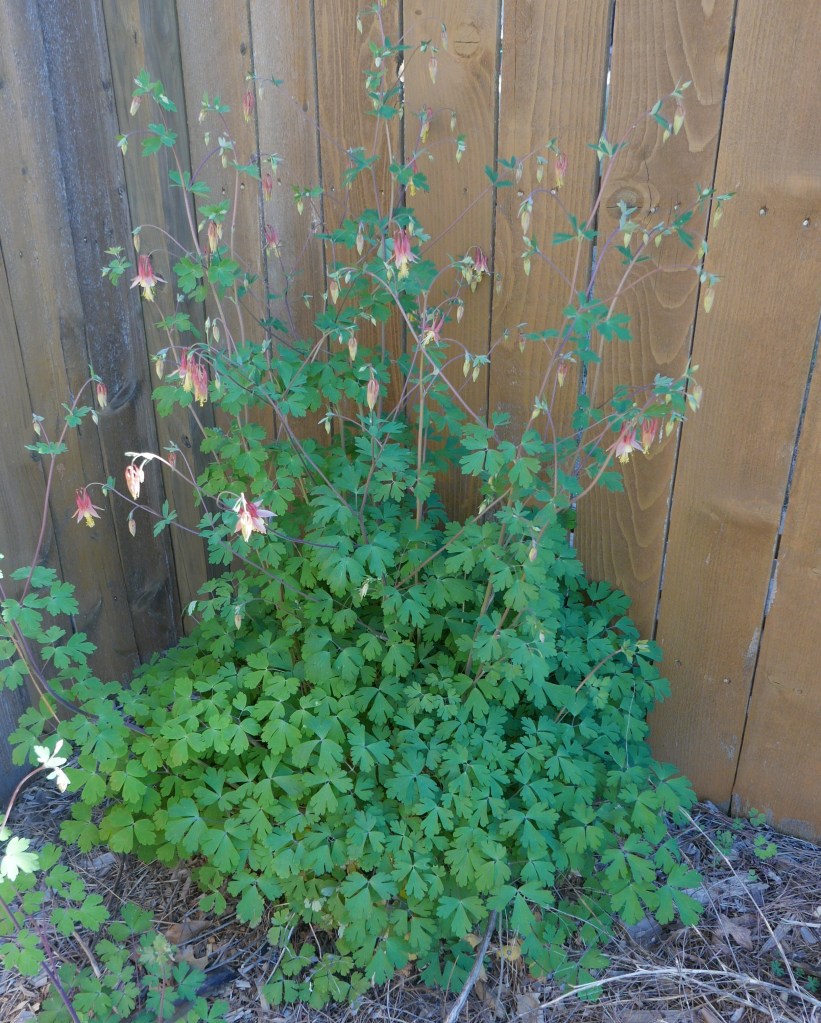
First up is columbine (Aquilegia canadensis), which sends up red flowers with yellow centers on long stalks. The deep shape of the flowers is perfect for hummingbirds and long-tongued insects. The long stalks also seem to favor pollinators that can fly and hover — it would take a while to walk from flower to flower! The red color attracts hummingbirds in particular because it’s an easier color for birds to see. (Hummingbird feeders are commonly red for this reason.) I also love the foliage, which reminds me of maidenhair fern, but without the water needs.
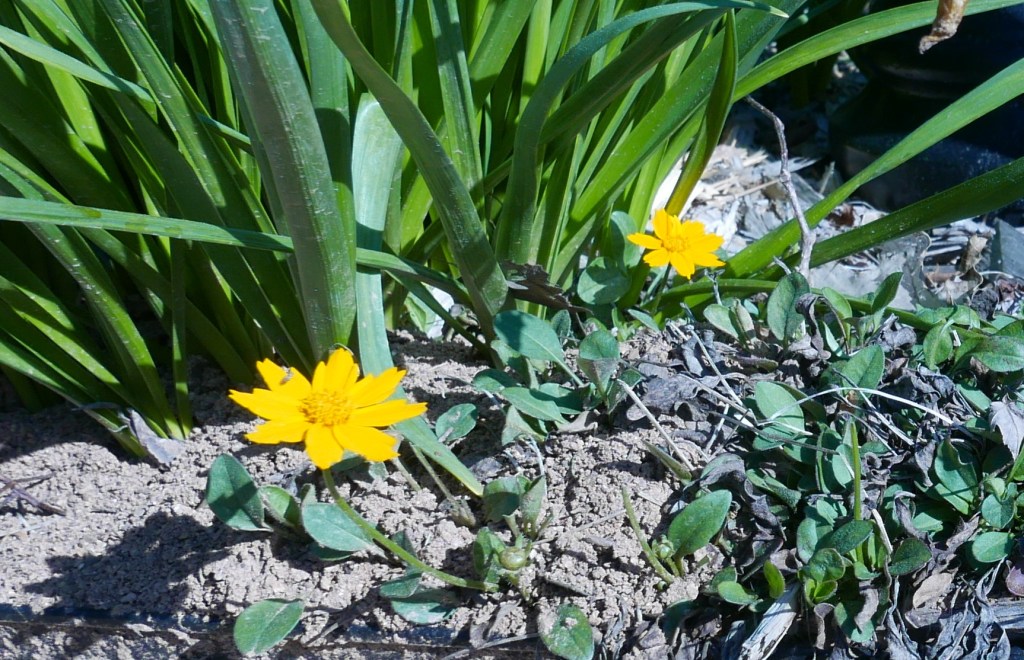
Next up, our mouse ear coreopsis (Coreopsis auriculata) is just starting to bloom. I’ve been thinking about digging some up and trying it in another spot in the yard to see if it will do even better. It bravely withstands the corner of our mailbox bed where the driveway joins the street. It can get pretty hot there, but it seems to do okay. The ants seem to love this area, but I’m not sure if the flowers have anything to do with that or not. Coreopsis technically have ray flowers and disc flowers – the ray flowers radiate outward like a cartoon version of the sun, and the disc flowers are where the magic happens. The ray flowers are sterile, I believe, but they serve as advertising to help guide insects to the center.
The larger bees’ favorite, hands down, are our blueberry bushes (Vaccinium virgatum). These are probably considered “nativars,” or cultivars of a native plant. I probably wrote all of the cultivar names down somewhere, but all are rabbit-eye blueberries, which are native to the southeastern United States. I know at least one is a Tifblue blueberry (probably originating out of Tifton, Georgia). Tifblues are well adapted to hot, humid summers. So naturally it does great here, but they all do!
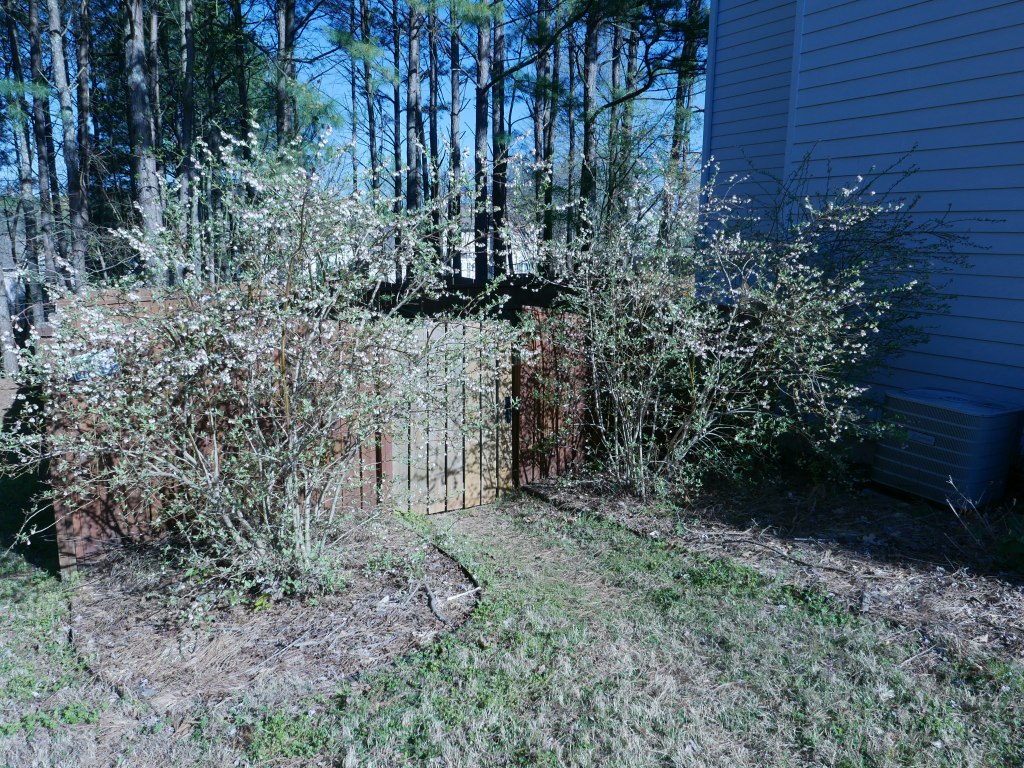
I realize I didn’t take a close-up shot, but the blueberry plants have small, bell-shaped flowers, and bees float from flower to flower looking for pollen and nectar. Since these plants are close together and have such a profusion of blooms, this makes the area extra-enticing for our larger bees, which seem to favor quantity of blooms. I’ve noticed the bees can be a bit territorial around these plants – these are prime feeding grounds! Don’t worry, they don’t pay humans much attention, but they will dive-bomb each other to fight off competition. I haven’t figured out what type of bee I’m seeing, but did you know there’s a bee called the Southeastern blueberry bee that specializes in pollinating blueberries?
In the blueberries’ case, food for the bees turns into food for us by the summertime. If we can beat the birds to it, we’ll have bowls filled with blueberries from these plants.
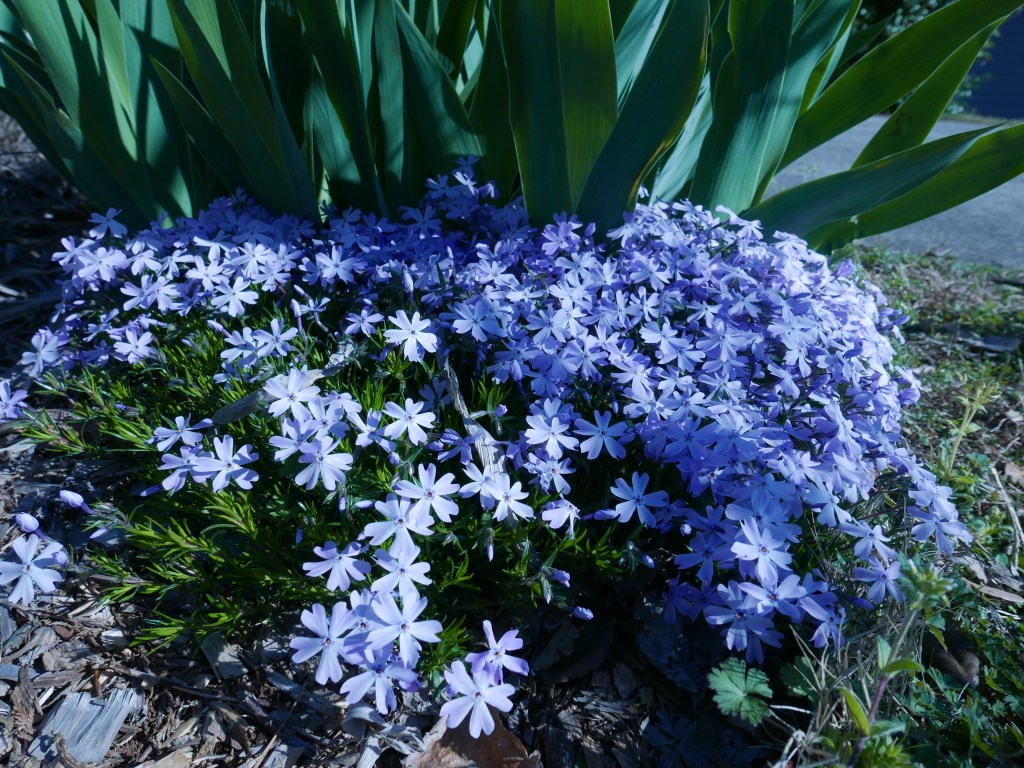
Last up is our creeping phlox (Phlox subulata), which is living its best life right now. Despite sounding somewhat like a loathsome disease, creeping phlox is a gorgeous plant that’s low maintenance and is great for filling in an area. You can see we have a mix of older, more established plants in full flower with some additions from last season to help fill in the area. I particularly like the way the phlox merges with our irises in the background. (We’re keeping some stems around for insect cover to the left in this photo, but I’ll be cleaning those up soon.)
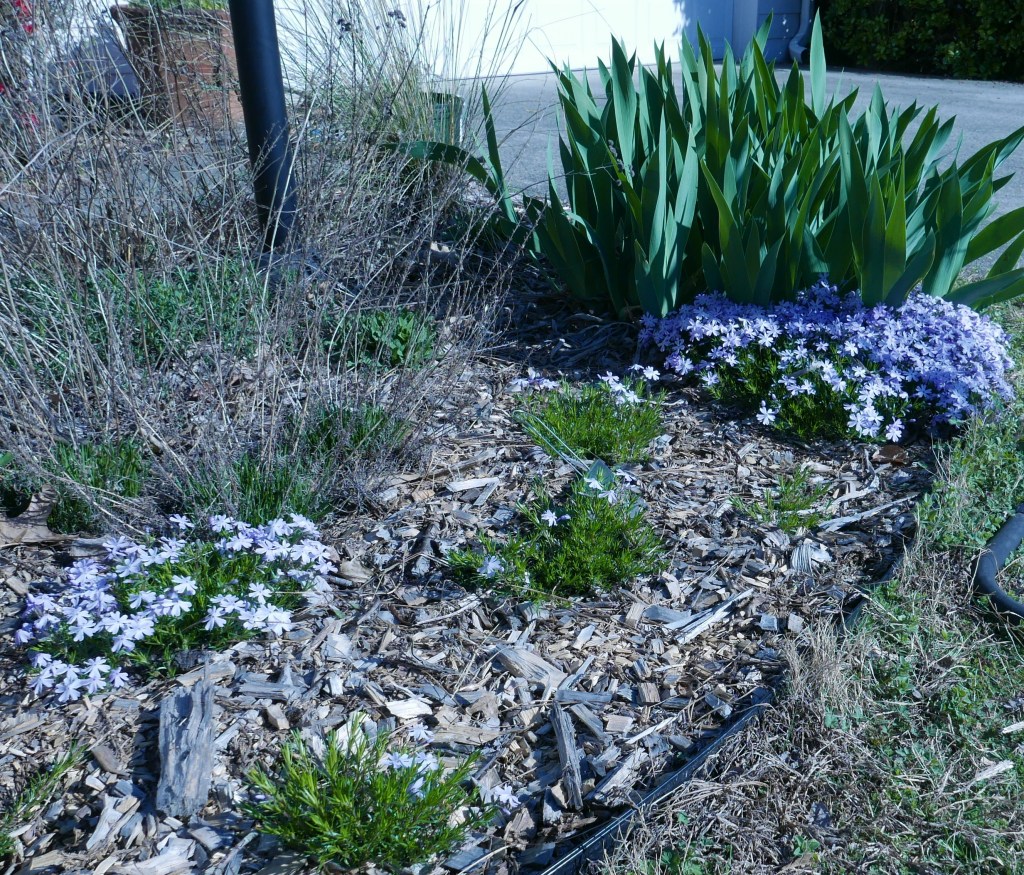
I don’t know what insects prefer the phlox, but by providing a variety of layers and textures of plants, we’re giving wildlife another layer of habitat. So I still consider it a win!
Happy gardening!
 Go Wildscaping
Leave a comment