
We’re on a quest to wildscape our land, but it helps to know what we have to work with. Below are just a few things to consider:
- What’s the land’s topography?
- How much light does it get?
- How does water flow through it?
- What plants and animals already live there?
- What is the general climate, and are there any micro-climates you can take advantage of?
That’s a lot to unpack, especially if you have a big property or (like me) you’re still learning how to identify what the heck you’re looking at most of the time. Today I’ll review my own property as an example.
General Geography & Climate
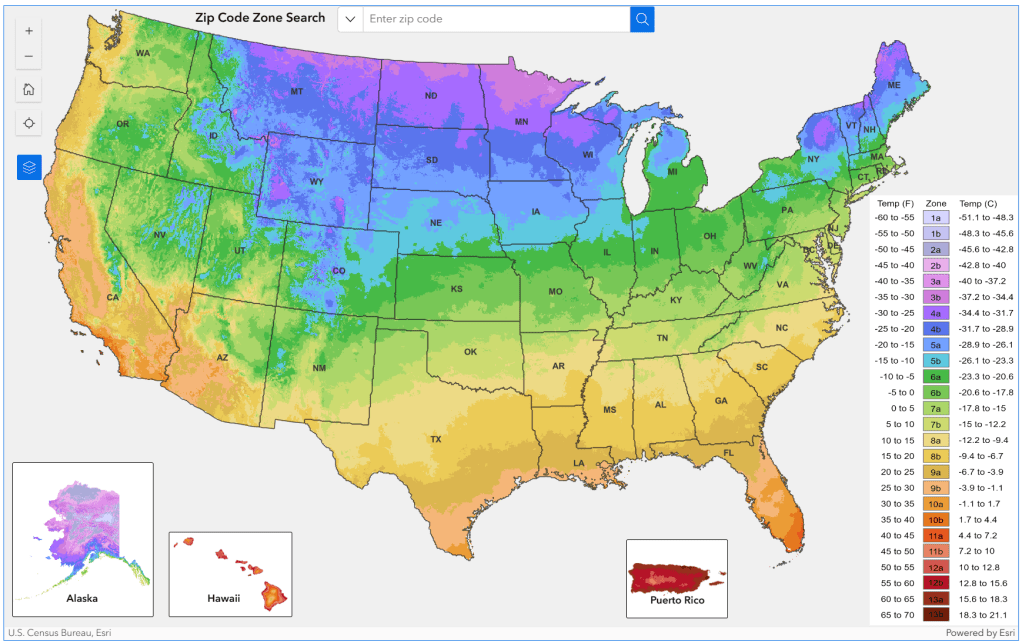
I live in the southeastern U.S. (Georgia). The winters here are relatively mild, at least by northern standards, but temperatures dip to below freezing in deeper parts of winter. Based on the USDA’s 2023 hardiness map, we’re in zone 8a, which translates to an average winter low of 15 to 20 degrees Fahrenheit. (It’s a pretty cool map – you can zoom in to see zones at even the street level.)
Winter temperatures also fluctuate, particularly late in the season. We had highs in the 70s just a few days ago followed by temps in the low 40s, and today was another warm day. As you might expect, summers here are long, hot, and humid.
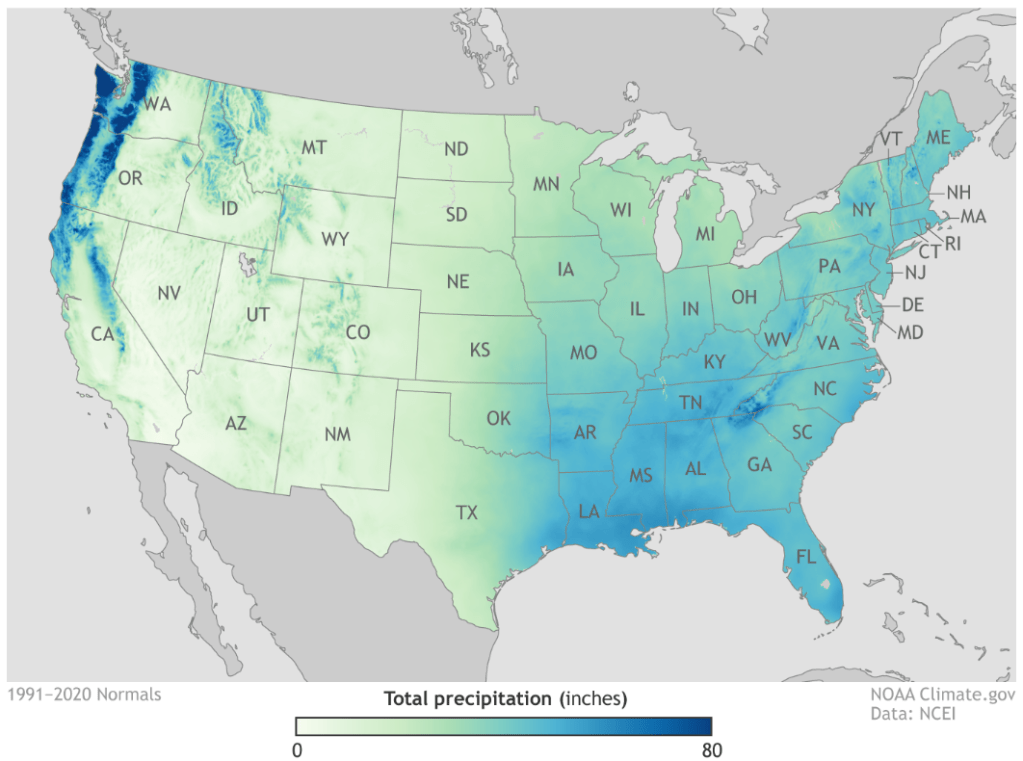
We get fairly consistent rainfall since we’re on the path that weather systems often travel after they form in the Gulf of Mexico. Yet we’ve had periods of drought, too. For example, our area had over 8 inches of rain back in August of 2013, but less than 1.5 inches the following year. (There’s cool historical data like this available on NOAA’s website if you’re curious to check your own area. NOAA also has some cool maps of average temperature and precipitation here – example below.)
Size & Topography
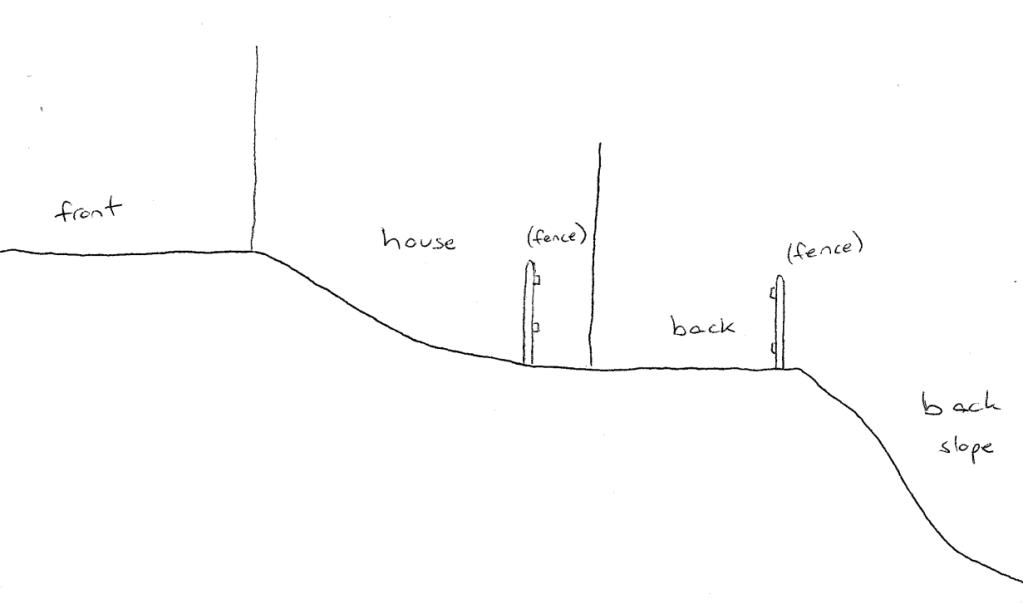
Our home sits on roughly a quarter acre in a subdivision. The property is fairly flat at street level and at the front of the house, but it slopes downward around either side of our home. Because of this slope, our home has a lower floor only on the back half of the house. The grade flattens out at the backyard for a while, and then it slopes steeply downward again. The back of the property touches a drainage easement, and beyond our property, the ground slops back up. In other words, we have a dry stream at the edge of our property.
Here’s a crude cross-section of the property (not to scale):
Flow of Water
Given the topography described above, water flows around either side of the house and down to the dry creek (at which point it’s not dry). We have red Georgia clay, which filters water slowly unless it’s hard-packed, in which case it puddles or simply runs off. For example, we have one area with a lot of foot traffic where the water ponds before soaking into the ground. It’s a mud pit for a couple of days after a rain. We also have an area in the northeastern side yard that seems to hold water and stay muddy after rains, probably because it faces northeast and it’s a flatter area at the bottom of a slope. Water eventually flows to a creek several hundred feet away from our property. I haven’t visited it yet, but I hear lots of frogs singing down there.
Sunlight
The front of the yard is roughly south/southeast facing. It receives nearly full sun aside from the shade cast by a tree on our property and occasional shade from trees on a neighboring property. One side yard faces roughly northeast, so it gets sun in the morning and mid-day, but it’s generally shaded by the house in the afternoon. The southwestern side yard is the opposite. The backyard is northwest-facing, and it has a sunny area (the mud zone, sadly), but it’s mostly pretty shady.
Existing Plants and Animals
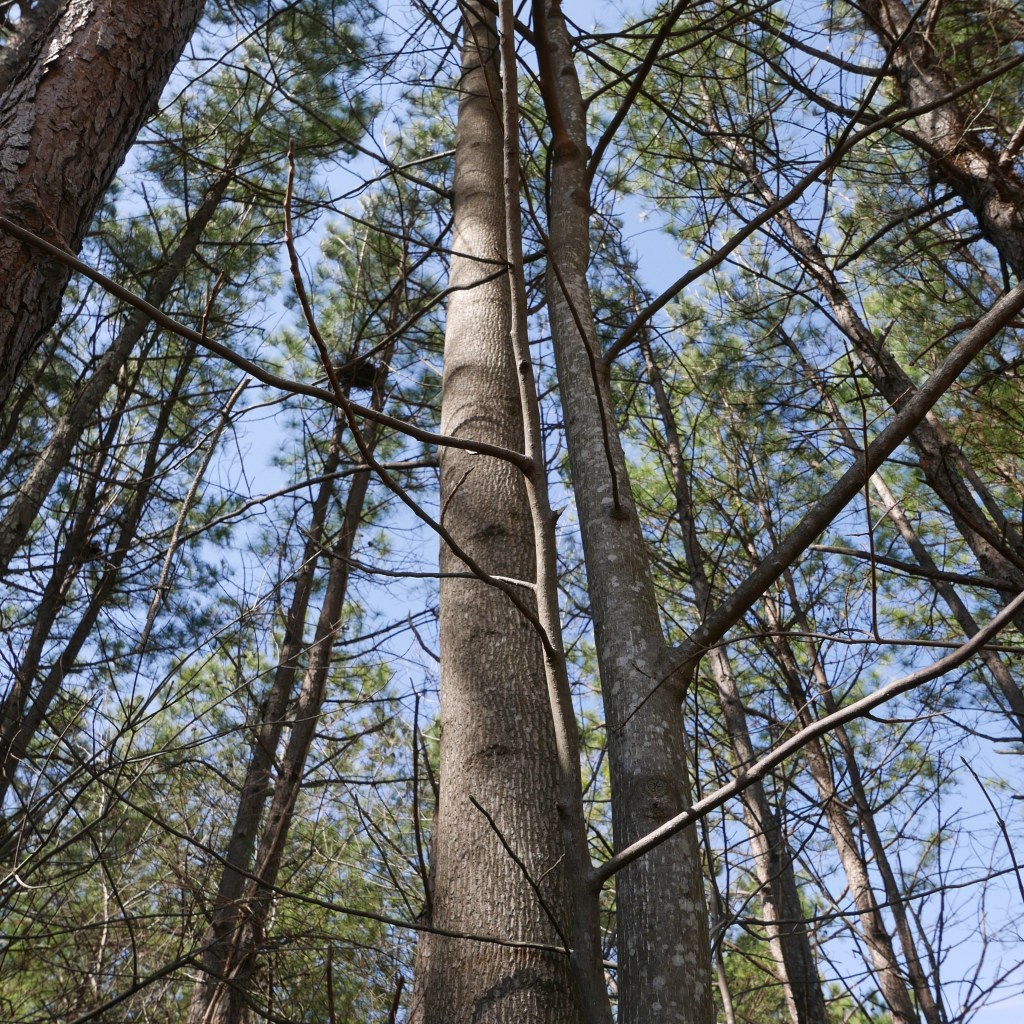
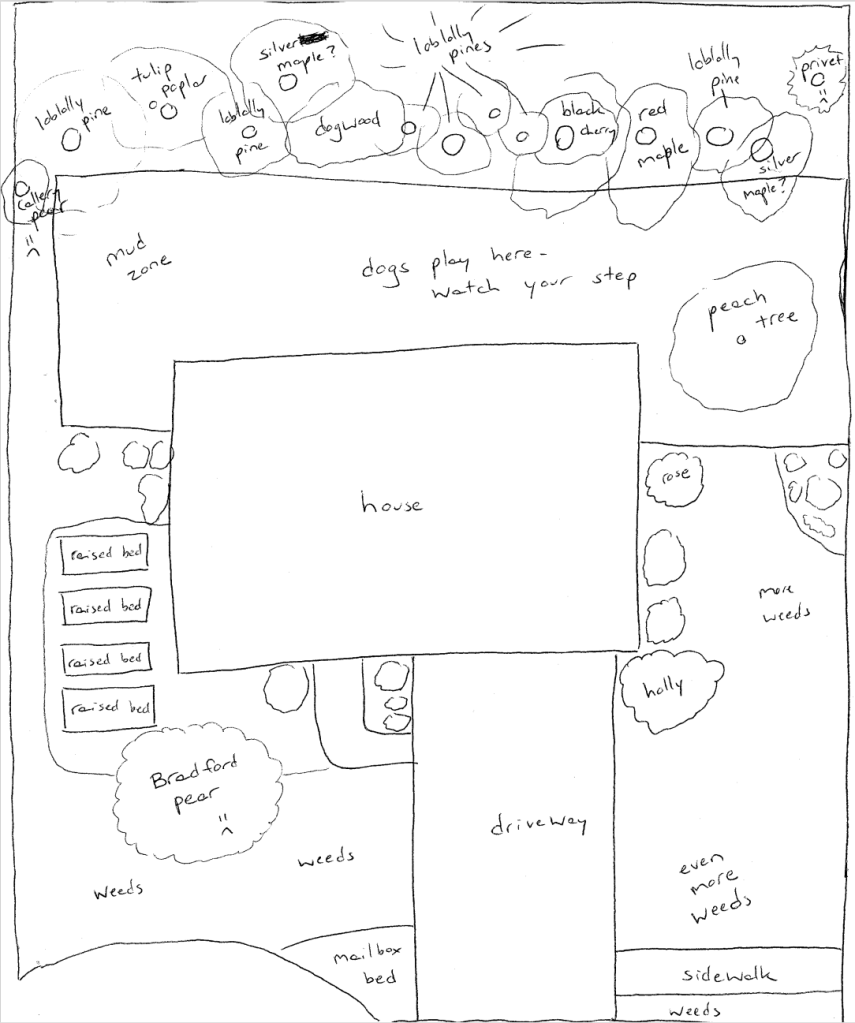
We have several trees in the back of the property, most of which are native trees we want to keep, but a couple of which are invasive non-native species, like a volunteer Callery pear and privet. The native tree species include several loblolly pines, a tulip poplar (tulip tree), a flowering dogwood, a black cherry, a red maple, and a couple of others that might be silver maples (not sure). We see a lot of birds, many of which I can’t identify, but I often see cardinals, bluebirds, chickadees, downy woodpeckers, red-bellied woodpeckers, and lots of small, brown-ish birds. (Maybe types of finches, wrens, or sparrows?) We also have a lot of squirrels and deer, and I hear barred owls hooting at night (but I’ve never seen them). A hawk sometimes perches at the edge of our woods, and our crows get mad and chase the hawk away.
The fenced backyard is moderately landscaped, although we have a pit-bull mix and a dachshund mix that have the run of the place. The pit-bull needs room to run around, and he’s basically a bull in a china shop. For her part, the dachshund LOVES to dig and chew, and between the two of them, this is a challenging area to start anything new. Even some more established plants have been trampled, dug up, or chewed back here. When the dogs aren’t out, we also see robins, northern mockingbirds, squirrels, and the occasional rabbit, plus several birds that use our feeder. We have a mix of native and non-native plants, including a peach tree. (Fun fact: peaches aren’t native to Georgia.) It produces edible peaches, but you have to pick them before the squirrels beat you to it. Before we got the dogs, we used to see snakes like DeKay’s brown snake and once, a huge black king snake. (It was so calm I nearly stepped on it.) Last summer we rescued a box turtle from this area before the dogs saw it, and we have lots of green and brown anoles and five-lined skinks.
The southwestern side yard has several raised beds where we grow cherry tomatoes and snap peas pretty well and almost everything else really poorly. We also have several rabbit-eye blueberry bushes, and the birds often beat us to the harvest. I can’t see this area from inside my house, but I see the rabbits in this area the most because they have a den in the neighbor’s yard. I also saw a big toad here once, and the lizards often sun themselves in the heat of the southwestern side of the house.
The northeastern side yard is mostly on a slope and is mostly grassy/weedy, but I started adding native plants here late last year. I often see robins looking for worms in the open areas, and I occasionally startle a mourning dove or a mockingbird from the bushes or along our fence back here.
The front yard is a mix of sun-loving native plants I’ve added, like goldenrod, coreopsis, butterfly milkweed, Virginia mountain mint, and others. It’s also home to a large Bradford pear I have very conflicted feelings about since it’s our only real shade during blazing hot summers, and a large holly beloved by our bees when it’s in bloom. Our lawn is a mixture of Bermuda grass and weeds. We often have various types of bees, wasps, hover flies, leafhoppers, ladybugs, ants, and spiders in the front yard. We’ve also seen a lot of evidence of mole activity, and we have many earthworms judging by the numbers rescued from our driveway after a rain.
Also, I don’t like to think of them, but we have mosquitoes everywhere.
Here’s a rough bird’s eye view of the property (again, not to scale, and the orientation is off by about 45 degrees):
General Assessment
I certainly don’t claim to have a model yard, whether from an aesthetics standpoint or as a native haven. Not yet, anyway. And that’s okay, because we all get to learn from my trials and errors! The really exciting thing is that we have a “before” picture we can compare against as we work towards the “after.”
Below are some preliminary thoughts and objectives:
Back Slope
- This area has a good mix of native canopy (tall) trees. It could use more understory trees and shrubs, ideally.
- This area has little in the way of low-growing plants. I’m on the lookout for plants that can grow in the shade of pines.
Fenced Backyard
- Landscaping with dogs can be a challenge, but we’ll look for ways to keep both our pets and plants happy. For example, we’ll need to find plants that aren’t toxic and can withstand some romping, or we’ll need to come up with alternatives, like container gardening or fencing off areas while plants get established.
- I’d like to do something about that mud zone!
Southwestern Side Yard
- This area already receives a good amount of attention through gardening. Despite that, most veggies seem to struggle in the raised beds. We’ll consider adding native plants to make this area more attractive and to entice beneficial insects to help combat garden pests.
Northeastern Side Yard
- This area is a fun place to try plants that prefer more shade.
- The muddy area at the bottom of the slope might be a good candidate for a native rain garden.
Front Yard
- I’d like to get rid of the Bradford pear tree. I’m not sure whether to replace it with something else for the shade benefit or not. The additional sun might help the veggies. The area under the tree is also a disaster of weeds and holes dug by the kids and dogs.
- We already have several native plants along the edge of the street, and the goal is to improve this area further.
Stay tuned for how we’ll tackle the volunteer Bradford pear/Callery pear at the northwestern edge of the property!

 Go Wildscaping
Leave a reply to vanvolkenburgh3eb975bf61 Cancel reply