
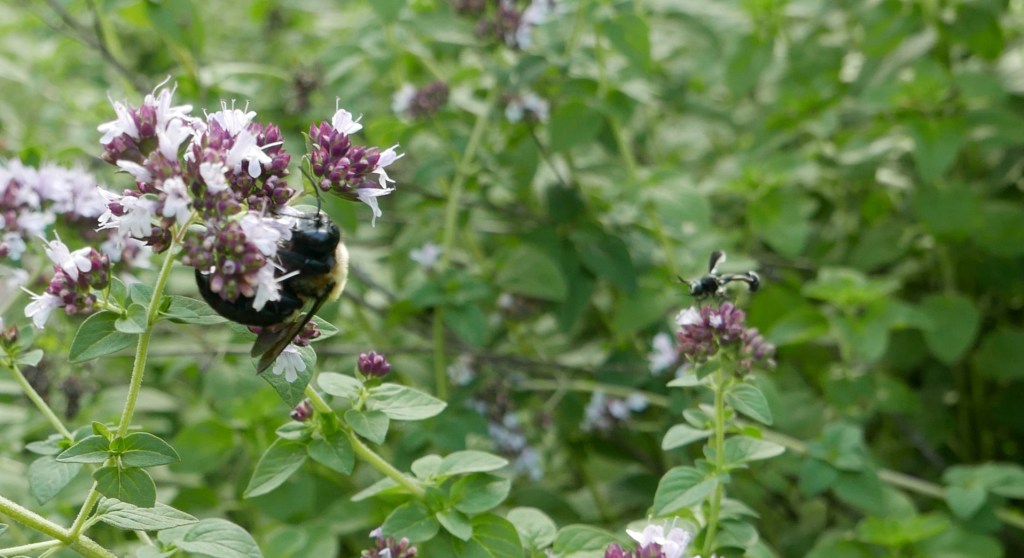
It’s been a busy spring/summer, but I wanted to share pictures of several pollinators (and a few non-pollinators) found on both native and non-native plants in our yard. These are from a few weeks ago, but still recent.
I’ll start with one I’d never seen before. I think it’s a snowberry clearwing hummingbird moth (Hemaris diffinis), but open to suggestions! It moves incredibly fast, much like a hummingbird, so forgive the blurry photos.
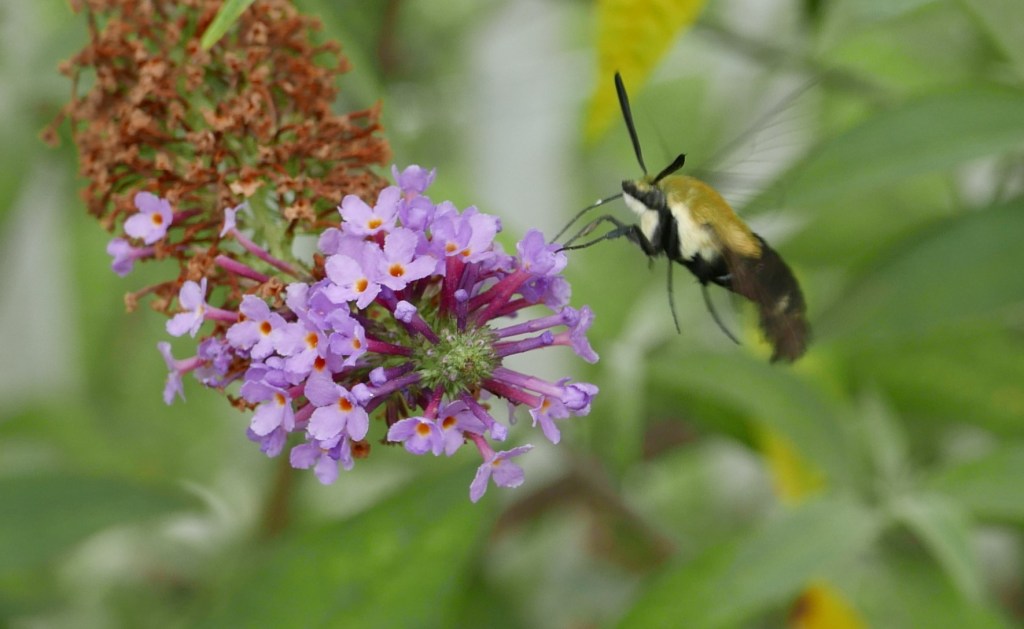
It’s also BIG. Here’s a shot of it next to a bumblebee for size comparison.

Notice how similar their colors are. Possibly we’re seeing biomimicry in action, since the moth benefits from looking like it could sting you. Similarly, hummingbirds are the chihuahuas of the bird world (having attitude and aggression disproportionate to their size). Personally, the idea of a hummingbird crossed with a bee sounds terrifying, so I’m sure it’s in this harmless moth’s interest to masquerade as a bit of both.
The hummingbird moth was enamored with our butterfly bush, which is not native and can be somewhat invasive. In another post, we’ll explore alternatives to this plant. Not now, though – let’s look at more bugs!1
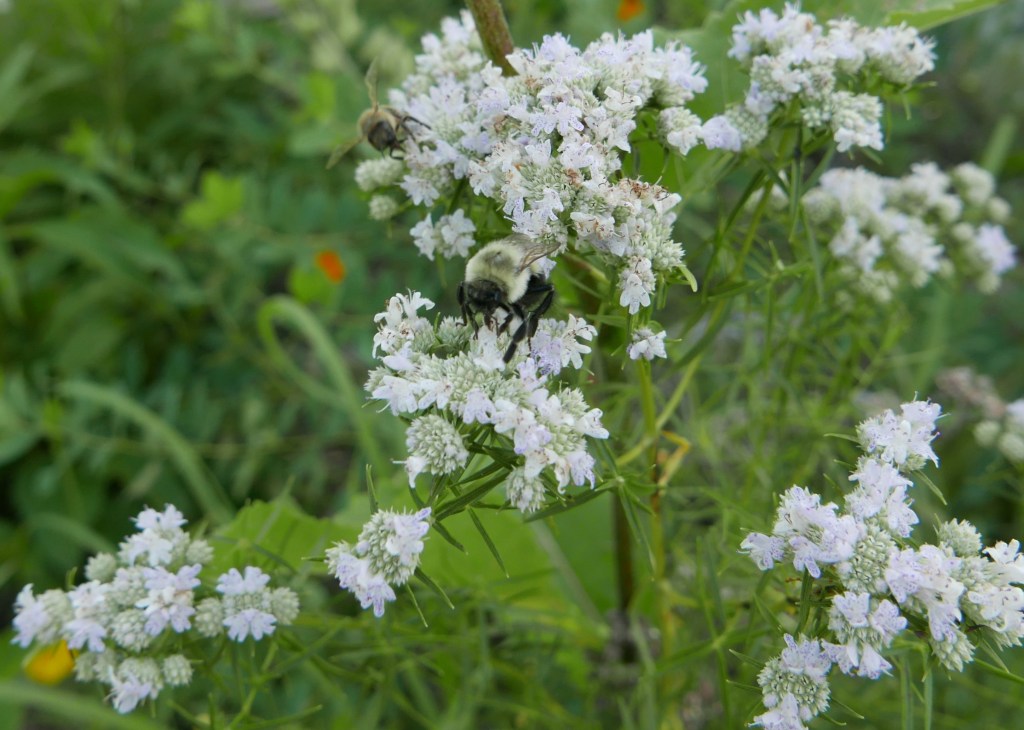
The bumblebees are fond of our narrow-leaf mountain mint, which fortunately is native:
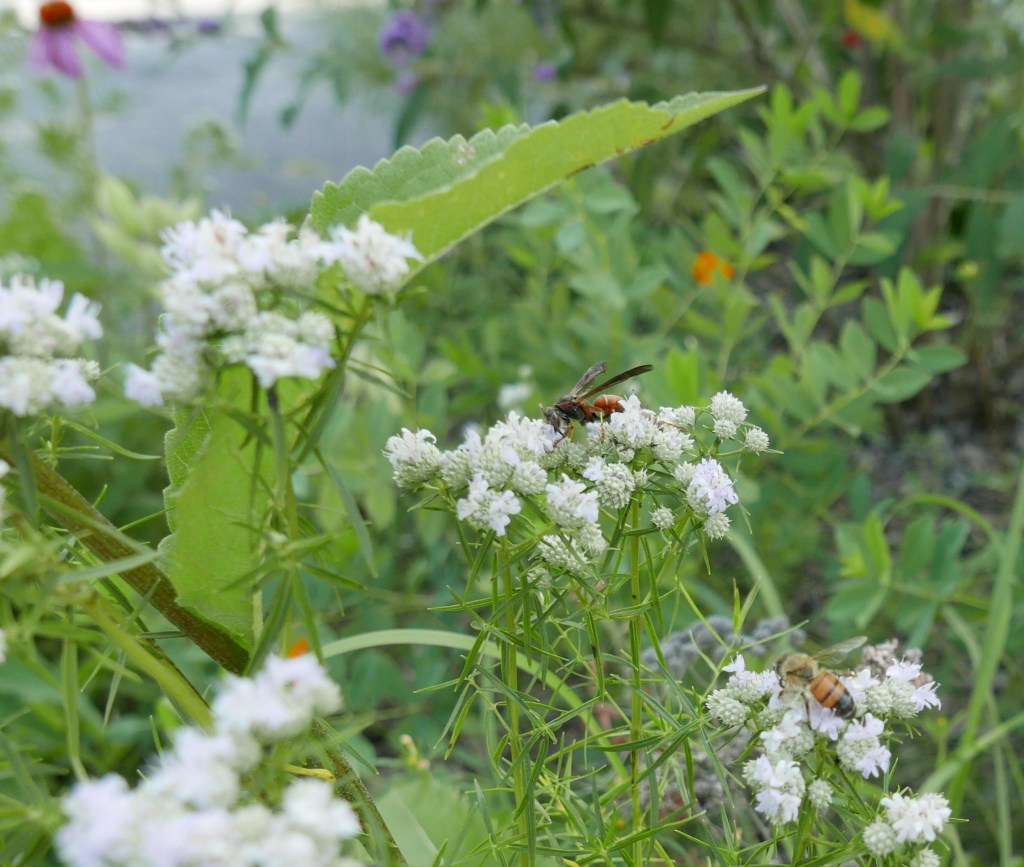
Wasps and honeybees love it, too:
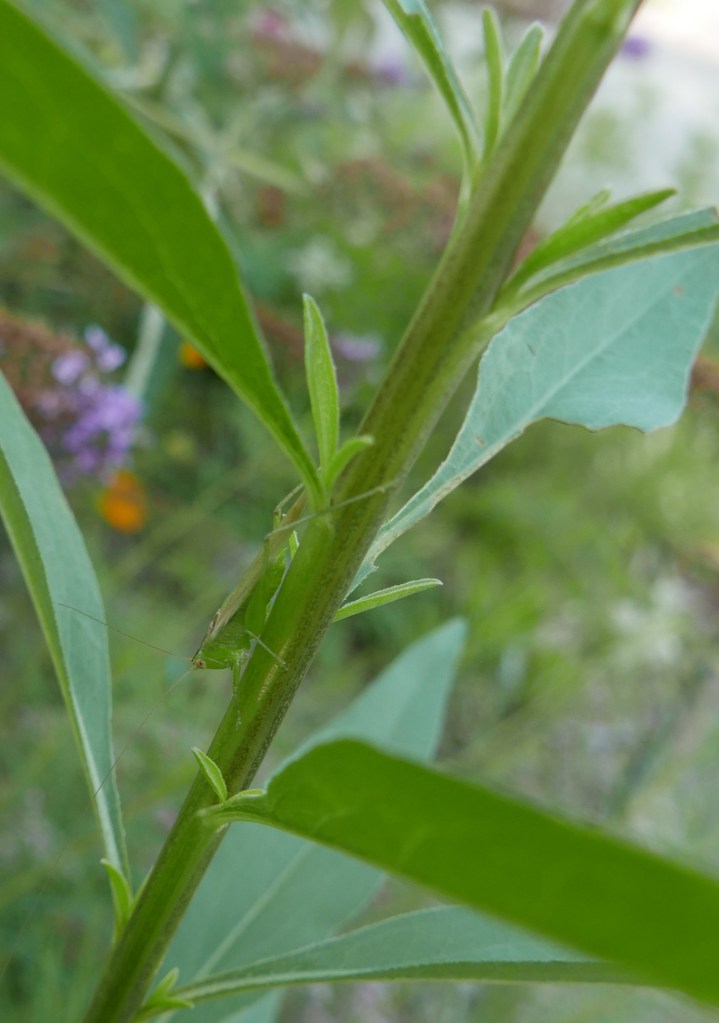
It’s not a pollinator, but here’s a young grasshopper on our goldenrod:
Another non-native plant the pollinators love is oregano. I’ll spare you all the pictures, but just imagine swarms of bumblebees and honeybees all over it. Instead, here’s a cool picture of another new-for-me insect:
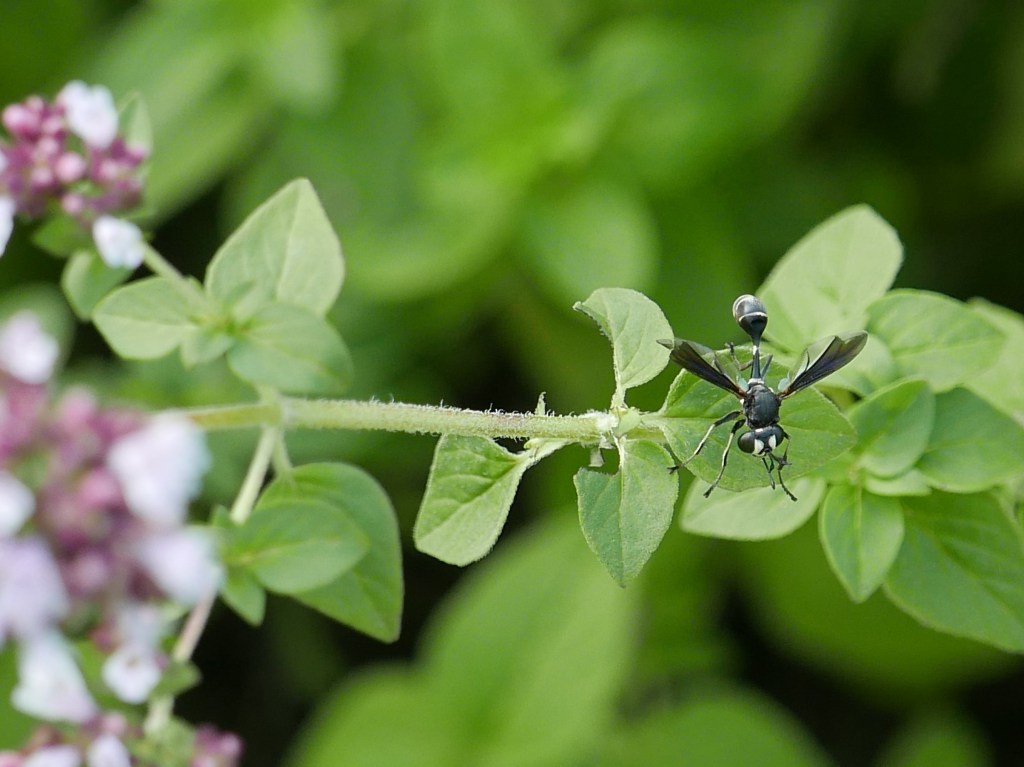
I think this is a type of thick-headed fly (Physocephala furcillata). Its name makes it sound rather dull-witted, but doesn’t it actually look quite clever? It looks on with amusement as it enjoys a pipe while enjoying the scenery. You can get an idea for its size from the cover photo, where you can see a blurry version of it next to a HUGE carpenter bee.
I like plants and flowers, don’t get me wrong. But if you’re fascinated by our tiny (and not-so-tiny) animal friends and would like to see more of them, one key is to plant a variety of plants that flower at different times of the year. Doing so provides a continual source of food for them2 and beauty for everyone!
- *I use the term “bugs” to mean all manner of invertebrates (much the same way Pokémon classifies bug-type pokemon). Yeah, yeah, we all know “true bugs” are a specific order of insect, and if I ever need to make that distinction, I’ll just say “true bugs”. ↩︎
- Providing pollinators with food also helps feed us, too! We have a HUGE harvest of peaches and blueberries this year, which we attribute in part to having so many flowers nearby that enticed bees and other insects to pollinate our crops! ↩︎


Leave a Reply