
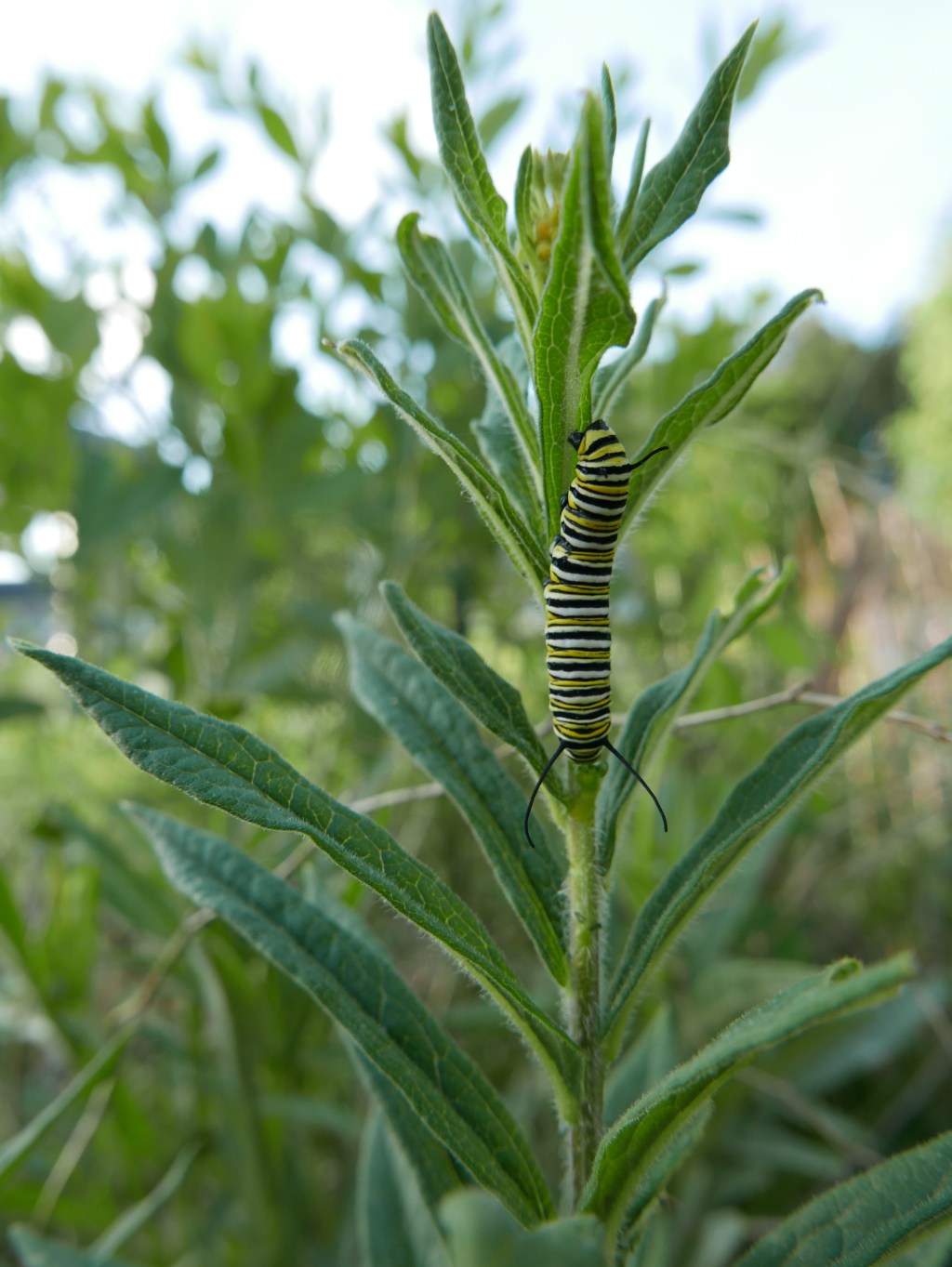
Guys, guys, guys! Look what I found on our milkweed the other day!
It’s a monarch caterpillar! For real!
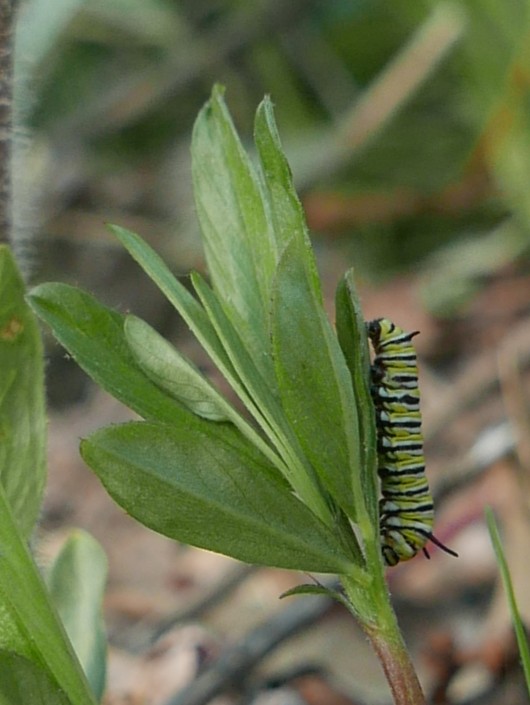
I took the picture directly above about a week ago (maybe a third instar?), and the featured image of this post was taken today (fifth instar, I think). Both shots are of the same patch of milkweed.
As some background, we planted milkweed (Asclepias tuberosa) in our sunny front yard several years back, and this patch has expanded over time. However, while I’ve seen milkweed bugs on these plants every year, I’d never seen evidence that monarchs (Danaus plexippus) actually used them. Can you tell I’m excited?
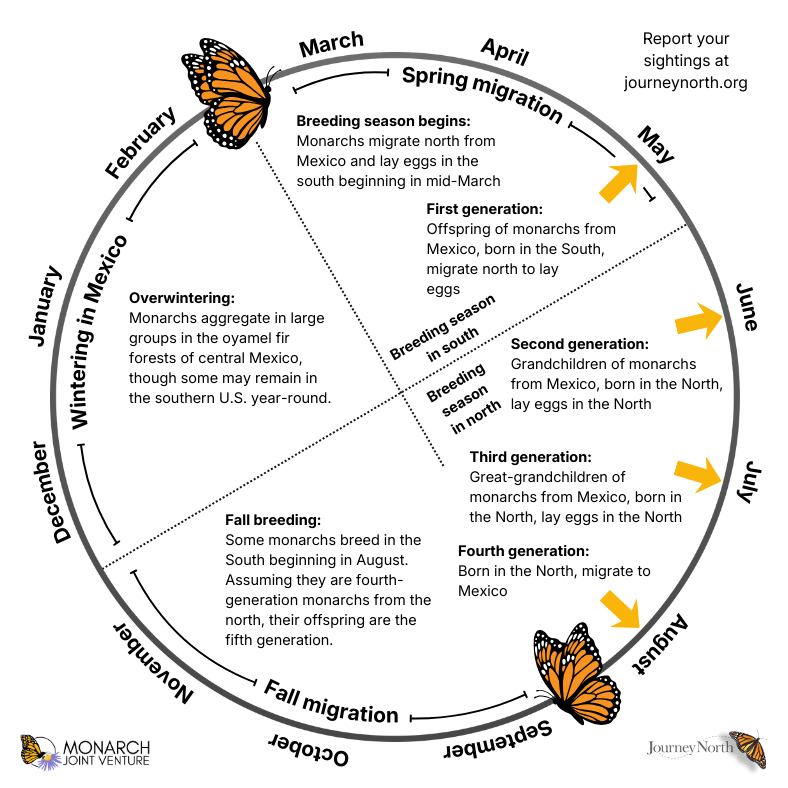
I posted a while back about monarch lifecycles. It’s fascinating stuff! Given the timing, this caterpillar is probably the first generation out of the Eastern monarch migration’s typical four generations each year. Meaning a monarch flew all the way from Mexico and landed in our yard, and the caterpillar I found is its offspring. If you’re interested in the timing, I found this cool infographic from JourneyNorth.org:
After poking around, I only found one caterpillar on our plants. And I’m not sure if that means that the mother only lay a few eggs here or if the other caterpillars simply didn’t make it (or maybe they’re just better at hiding).
Still… even one can make a difference.
I mean, you’ve heard of the butterfly effect, right? That applies here on so many levels. Jonathan Case is just one person, but he wrote and illustrated a super cool graphic novel that first got me interested in monarch butterflies. And I’m just one person, but I planted a native species of milkweed in our yard. And although it’s not necessarily a milkweed favored by monarchs, the plants were in the right place at the right time for one monarch butterfly. And maybe not all of her offspring survived, but one did, and maybe it will continue the cycle, and so on! Plus, like, literal butterflies.
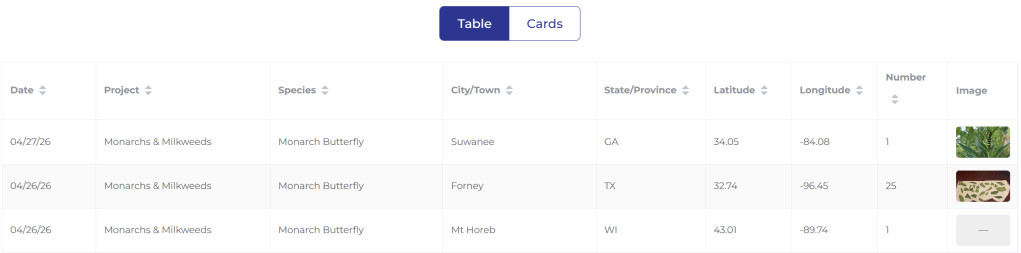
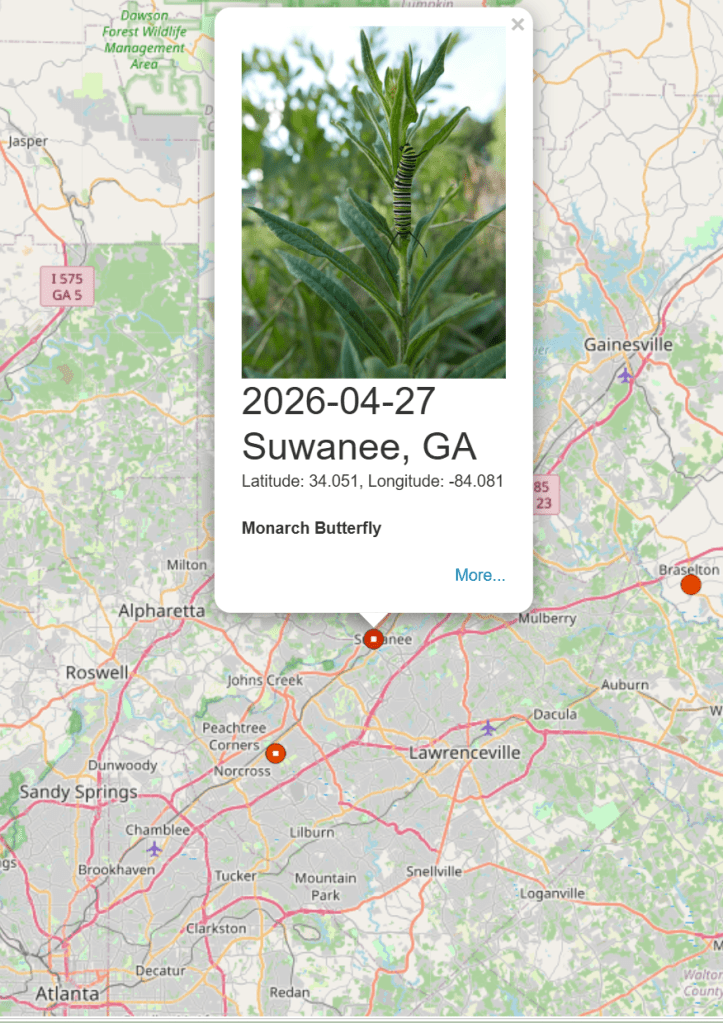
I also learned today that you can report monarch sightings on the Journey North website. Journey North is an organization that tracks monarch migration data (along with other migrating species) through reports submitted by individuals like you and me. Let’s hear it for community science! Although you can register as a member, you can also just report as a guest, too. There’s even a cool way to search other sightings! Here’s a screenshot where you can see my posting in their data view. Looks like there have been other recent sightings in Forney, Texas and Mt. Horeb, Wisconsin:
If you like maps, JourneyNorth also has a map view. Here’s my reported sighting again:
Impacts don’t have to be huge, or showy, or even consistent to matter. So if you ever feel like you don’t make a difference, just know that you do.
Happy gardening, everybody!


Leave a Reply